If you've driven Highway 3 across southern British Columbia, you know the feeling. The road twists through mountain passes, drops into river valleys, climbs again through stands of pine and fir so thick the sunlight barely reaches the pavement. It's one of the most beautiful — and most demanding — drives in the province. And right in the middle of it, tucked into a narrow valley between the Okanagan and the Kootenays, sits Greenwood.
Highway 3 — the Crowsnest Highway — is the lifeline of the Boundary Country. It has been since the first version of the road was carved through these mountains in the early 20th century. Before that, it was wagon roads and rail lines. But the purpose has always been the same: moving people, goods, and resources through some of the most rugged terrain in Canada. And for as long as there's been a highway, there have been people who needed to stop, sit down, and eat a real meal before getting back on the road.
The Road That Built a Region
The Crowsnest Highway stretches roughly 840 kilometers from Hope to the Alberta border at Crowsnest Pass, threading through some of the most storied country in BC. The Boundary section — the stretch running from Osoyoos through Bridesville, Rock Creek, Midway, Greenwood, and on to Grand Forks — is the heart of the route's southern interior passage. This is where the road earns its reputation.
Anarchist Mountain, rising over 1,200 meters between Osoyoos and Bridesville, is legendary among truckers. The long descent into Rock Creek, the gentle valley through Midway — Canada's Mile Zero of the Trans-Canada Trail — and then the climb into Greenwood through the Boundary Creek canyon. Each section has its own character, its own challenges, its own beauty. And each section has been traveled by generations of truckers, loggers, families, and adventurers who keep this corridor alive.
The modern highway was completed in stages throughout the 1950s and 1960s, replacing the older wagon roads and narrow, unpaved routes that had served the Boundary Country since the mining days. When the paved highway opened, it transformed the region. Suddenly, the small towns between the Okanagan and the Kootenays were connected to the rest of the province in a way they'd never been before. Commerce flowed. Tourism appeared. And the trucks started rolling.
Timber! The Logging Industry
Long before the highway was paved, the Boundary Country was logging country. The forests of the southern interior — dense stands of Douglas fir, ponderosa pine, spruce, and cedar — had been drawing timber operations since the late 1800s, when the mines needed lumber for shoring tunnels and building boomtowns. But logging became its own industry as the 20th century progressed, and by the 1950s and 1960s, it was the economic backbone of the region.
The lumber camps were scattered throughout the Boundary hills — up the Kettle Valley, along the West Kettle River, into the high country between Greenwood and Beaverdell. The work was brutal and seasonal. Lumberjacks worked from first light to last, felling trees with chainsaws, skidding logs with cats and horses, loading trucks that would haul the timber to the mills in Grand Forks, Midway, and beyond.
These men ate like they worked — hard and fast. A lumberjack's breakfast was the stuff of legend: stacks of pancakes, platters of bacon and sausage, eggs any way you wanted them, toast by the loaf, and coffee by the gallon. The logging camp cookhouse was sacred ground. A good cook could keep a crew happy. A bad one could lose half your men to the next outfit down the road. The food had to be hot, it had to be plentiful, and it had to be good.
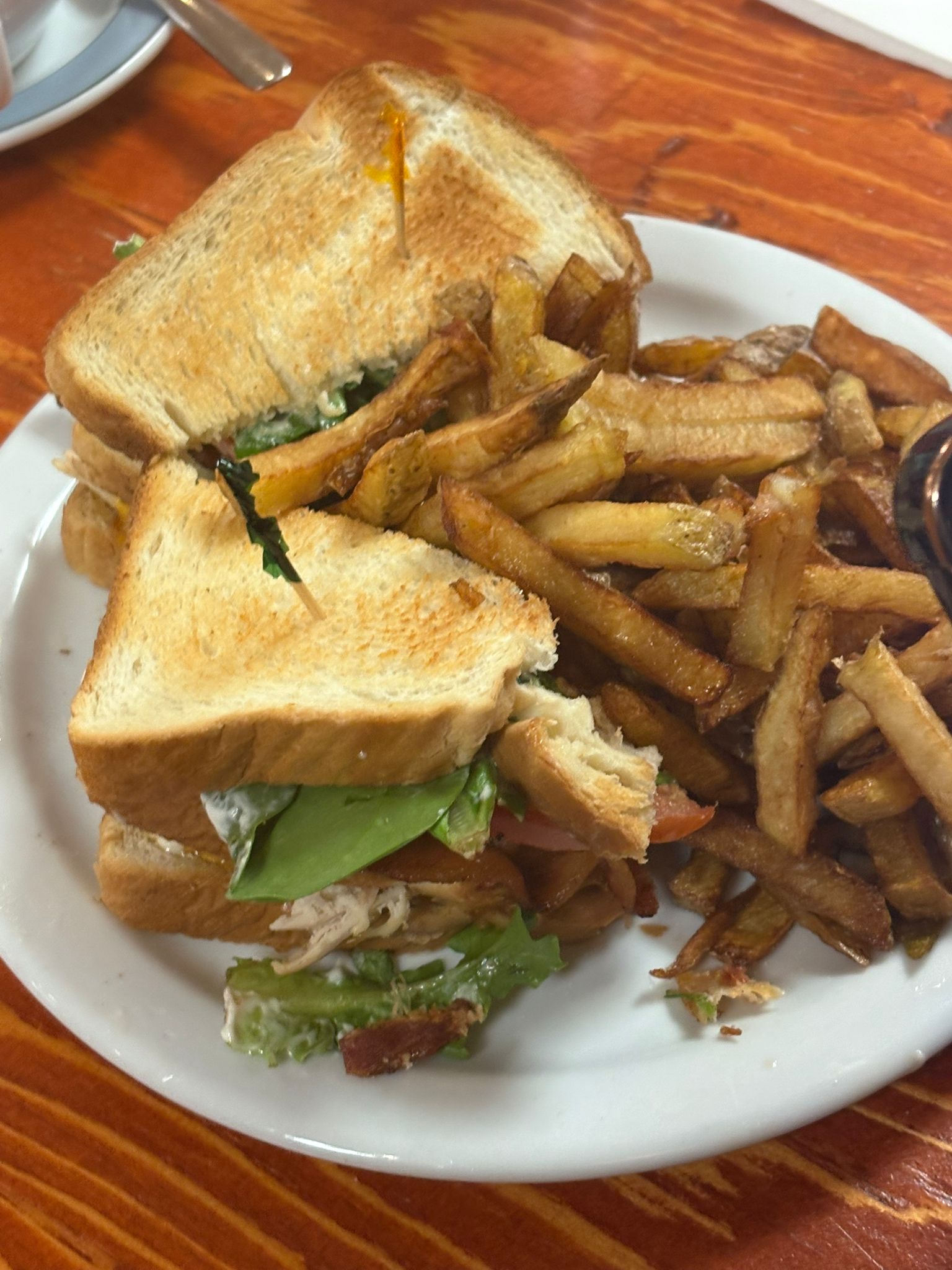
The kind of breakfast that fueled lumberjacks — and still fuels everyone who walks through Mama's door
The Trucker's Stop
Today, Highway 3 carries a steady stream of commercial traffic: logging trucks stacked with fresh-cut timber, flatbeds hauling equipment, refrigerated trailers carrying produce from the Okanagan, tanker trucks, and long-haul rigs running goods between Alberta and the coast. The Boundary section is a critical link — there's no faster alternative through the southern interior, and every one of those trucks has a driver who needs to eat.
Ask any trucker who regularly runs Highway 3 and they'll tell you: the stretch between the Okanagan and Grand Forks is one of the loneliest. After Osoyoos, the services thin out fast. Rock Creek has a gas station. Midway is a blink-and-you-miss-it village. And then there's Greenwood — and right there on the highway, on South Copper Avenue as it passes through the heart of town, there's Mama's Grill.
It's exactly the kind of place that truckers have relied on for decades: a real restaurant with real food, not a gas station microwave. A place where you can get a full hot breakfast at a reasonable price, where the coffee is strong and the refills keep coming, and where the person behind the counter treats you like a human being even if they've never seen you before. For a driver who's been grinding through mountain passes since dawn, that matters more than you might think.
The Kettle Valley Connection
The Boundary Country's transportation story doesn't start with the highway. The Kettle Valley Railway — one of the most ambitious and challenging rail lines ever built in Canada — wound through these mountains starting in 1915, connecting the Kootenays to the coast via a dizzying series of tunnels, trestles, and switchbacks. The KVR, as locals called it, was the original lifeline for towns like Midway, Greenwood, and the now-vanished mining camps in the hills above.
The railway brought supplies in and ore out. It carried passengers, mail, and livestock. And at every stop along the line, there were people who needed to be fed. The railroad hotels and station restaurants of the early 1900s were the predecessors of the highway diners and roadside grills that would come later. When the last KVR train ran in 1964 — replaced by the highway — the torch passed from the railroad dining car to the roadside restaurant. The old KVR right-of-way is now the Trans Canada Trail, and cyclists and hikers who pedal or walk into Greenwood today are carrying on a tradition of travelers who arrive hungry and leave satisfied.
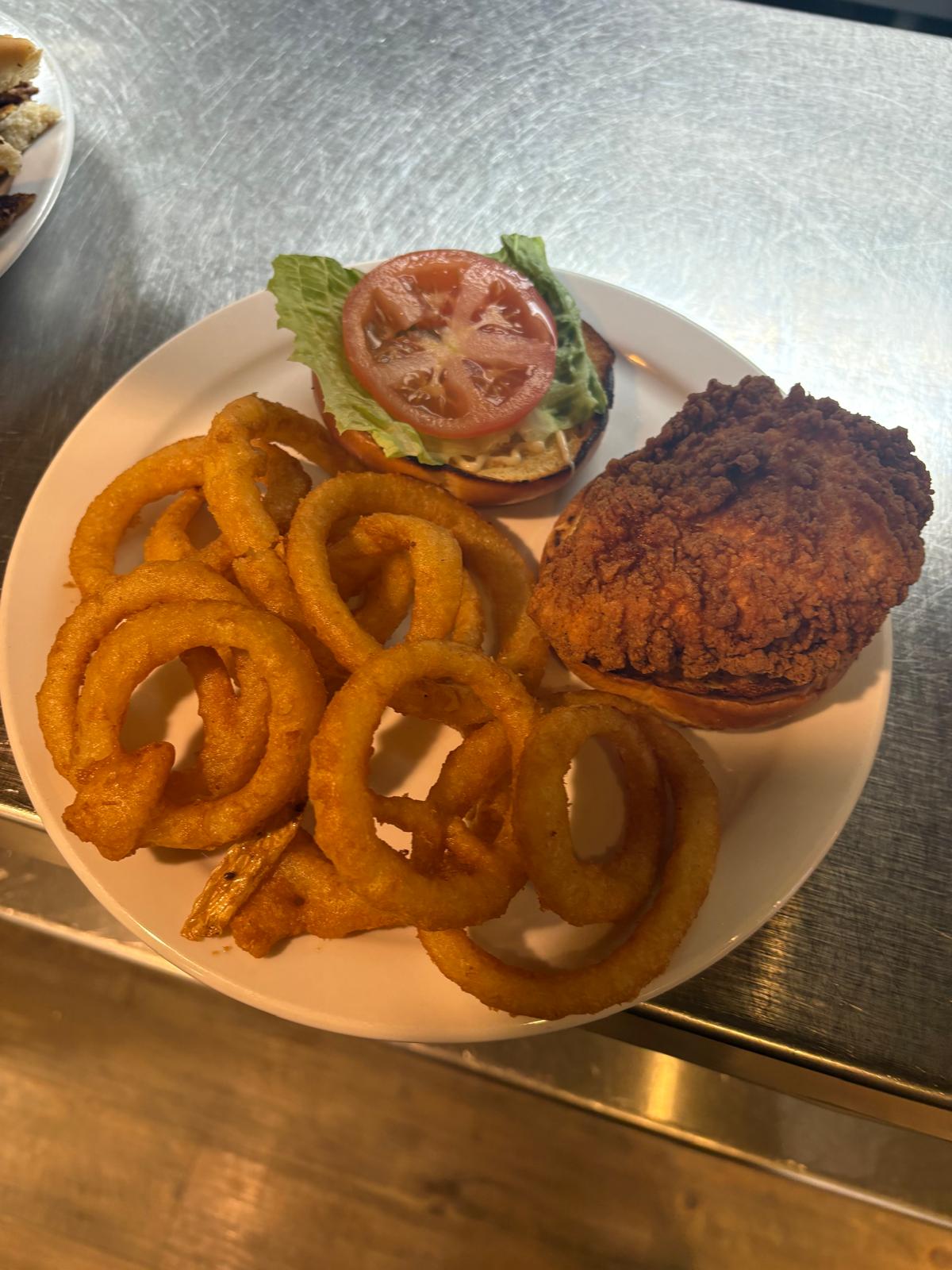
A Mama's burger — the kind of meal that makes you glad you pulled off the highway
Mama's Grill: Right Where You Need It
Mama's Grill sits right on the highway, in the heart of Greenwood, exactly where a hungry traveler needs it to be. Now in our second year, the team at Mama's Grill is serving the kind of food that this stretch of road demands: All Day Hot Breakfast with eggs, bacon, sausage, hash browns, and toast stacked on plates that would make a lumberjack grin. Hand-formed burgers grilled over open flame. Weekly specials that give the regulars something to look forward to and the first-timers a reason to come back.
The coffee is always hot. The portions are always generous. And the atmosphere is exactly what you want after a long drive through the mountains: warm, welcoming, and unpretentious. No tablecloths, no attitude, no nonsense. Just good food served by good people in a town that's been taking care of travelers since the first prospector walked through the Boundary Creek canyon.
Whether you're a trucker running a load from Cranbrook to Kelowna, a cyclist on the Trans Canada Trail, a family on a summer road trip, or a local who's been eating here since the first week the doors opened — Mama's Grill is your stop. It's always been your stop. The lumberjacks knew it. The truckers know it. And now you know it too.
Next time you're on Highway 3, don't blow through Greenwood. Pull over. Sit down. Order the breakfast. You'll understand why this little restaurant on the Crowsnest Highway is becoming a local favourite — and why the best meals are always found in the places you least expect. Mama's Grill, 298 South Copper Avenue, Greenwood, BC. Right on the highway. Right where you need us.