Before there was a restaurant on South Copper Avenue — before there were paved roads, electric lights, or even a city charter — there was copper. Mountains of it. And the men who came to pull it from the earth changed the Boundary Country forever.
This is the story of Greenwood, British Columbia — a place that roared to life on the promise of mineral wealth, survived booms and busts that would have leveled lesser towns, and still stands today as the smallest city in Canada. It's also the story of why a restaurant called Mama's Grill exists in this unlikely place, and why its menu pays tribute to the miners who built everything you see around you.
The Boundary Country Gold Rush
The story begins in the 1880s, when prospectors first started poking around the hills of what would become the Boundary district of southern British Columbia. Gold had already drawn thousands to the Fraser River and the Cariboo, but the real treasure in the Boundary Country lay deeper — in massive deposits of copper and gold ore hidden beneath the volcanic rock of the Greenwood-Phoenix corridor.
By 1895, Robert Wood — the man who would give Greenwood its name — had laid out a townsite in the narrow valley along Boundary Creek. He was a shrewd promoter who understood that where there was ore, there would be a city. And he was right. Within two years, Greenwood had incorporated as a city — on July 12, 1897 — making it one of the youngest and most ambitious municipalities in the province.
The timing was perfect. The Canadian Pacific Railway's Columbia & Western branch line was pushing through the Boundary Country, connecting the remote mining camps to the outside world. Capital flowed in from Montreal, London, and New York. Claims were staked across the hills. And the biggest prize of all was the Mother Lode mine, a massive copper-gold deposit perched in the hills just south of town.
The BC Copper Company Smelter
In 1901, the BC Copper Company fired up its smelter on the flats just outside Greenwood. It was an enormous industrial operation for such a remote location — and at its peak, it was one of the largest copper smelters in the entire British Empire. The smelter processed ore from the Mother Lode mine, the Sunset mine, the Oro Denoro, and dozens of smaller claims scattered across the Boundary hills.
The scale was staggering. The smelter's smokestacks pumped out clouds visible for miles. Trains loaded with ore rumbled in from the mines day and night. At the operation's height, the BC Copper Company was processing over 2,000 tons of ore per day, extracting copper, gold, and silver from the hard rock of the Boundary Country.
And then there was Phoenix. Perched at over 4,600 feet elevation in the mountains above Greenwood, the mining town of Phoenix was home to the Granby Consolidated Mining, Smelting and Power Company's massive open-pit operations. Phoenix boomed to a population of over 4,000 — a boomtown in every sense, complete with hotels, saloons, a hospital, and the highest-elevation hockey rink in Canada. The Granby smelter in nearby Grand Forks processed Phoenix's ore, but the workers moved freely between the camps, and Greenwood was the supply hub for the entire district.
3,000 Hungry Miners
At the height of the copper boom, between 1899 and 1918, Greenwood's population surged past 3,000 people. The streets bustled with miners, smelter workers, teamsters, merchants, and the families who followed them. Copper Street, Gold Street, Silver Street — even the street names told the story of what drove this place.
Think about what it took to work those mines. Twelve-hour shifts underground in the Mother Lode, drilling and blasting through solid rock. The smelter crews working in brutal heat, tending furnaces that ran 24 hours a day. The teamsters hauling ore down mountain roads in all weather. These were men who burned through calories like the smelter burned through coal, and they needed real food — hearty, stick-to-your-ribs meals that could fuel a body through the hardest physical labor imaginable.
Greenwood's boarding houses and cookhouses served exactly that: massive plates of eggs, thick-cut bacon, hash browns, steak, stews, fresh bread, and pie. There was nothing fancy about it. It was fuel. It was comfort. It was home cooking for men who were far from home, and it kept the whole operation running. The cookhouse bell was as important as the mine whistle — you couldn't dig copper on an empty stomach.
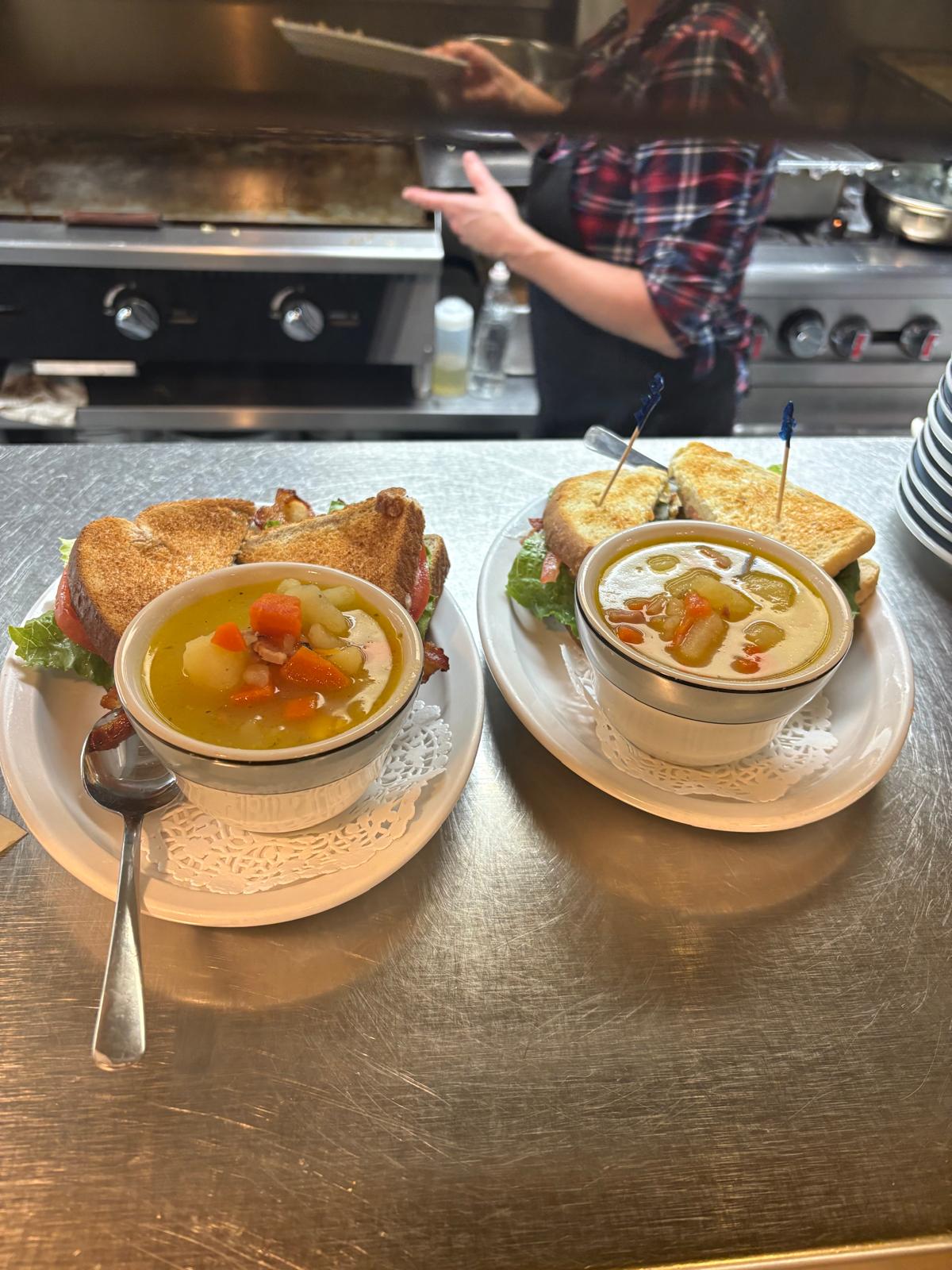
The kind of plate that would make a copper miner proud — loaded and ready at Mama's Grill
The Bust — And What Survived
Like all boom towns, Greenwood's glory days couldn't last forever. Copper prices crashed after World War I. The BC Copper Company smelter shut down in 1918. The Mother Lode mine closed. Phoenix — that roaring city in the sky — was abandoned entirely, its buildings dismantled and hauled away until nothing remained but concrete foundations and rusting machinery. Today, Phoenix is a ghost town in the truest sense: the entire mountainside was eventually consumed by modern open-pit mining, erasing nearly every trace of the town that once stood there.
Greenwood survived, but just barely. The population plummeted. Businesses closed. Families moved on to wherever the next boom was calling. But the city never gave up its charter, never surrendered its incorporation. The people who stayed were the stubborn ones, the ones who loved this valley and its mountains too much to leave. They found other ways to make a living — logging, ranching, small-scale mining — and they held on.
The Miner's Legacy on Mama's Menu
Walk into Mama's Grill today and look at the breakfast menu. You'll find the Gold Miner Omelette, the Copper Miner Omelette, and the Silver Miner Omelette. These aren't just clever names — they're tributes. Every one of those omelettes is loaded the way a miner would demand: packed with meat, cheese, vegetables, and enough substance to fuel a full day's work. They're the spiritual descendants of those boarding house breakfasts that kept the Mother Lode running over a century ago.
Those names aren't an accident. When you live in Greenwood, you live with the mining history every single day. The street you drive on — Copper Avenue — was named for the metal that built the town. The old smelter foundations are still visible on the edge of town. The museum is filled with ore samples, mining tools, and photographs of the men who worked the claims. Mining isn't just history here. It's identity.
And the tradition of feeding hard-working people? That's exactly what Mama's Grill is doing now in our second year. The miners are gone, but the truckers, loggers, ranchers, road crews, and tradespeople who keep the Boundary Country running still need the same thing those copper miners needed: a real meal, cooked fresh, served by people who give a damn.
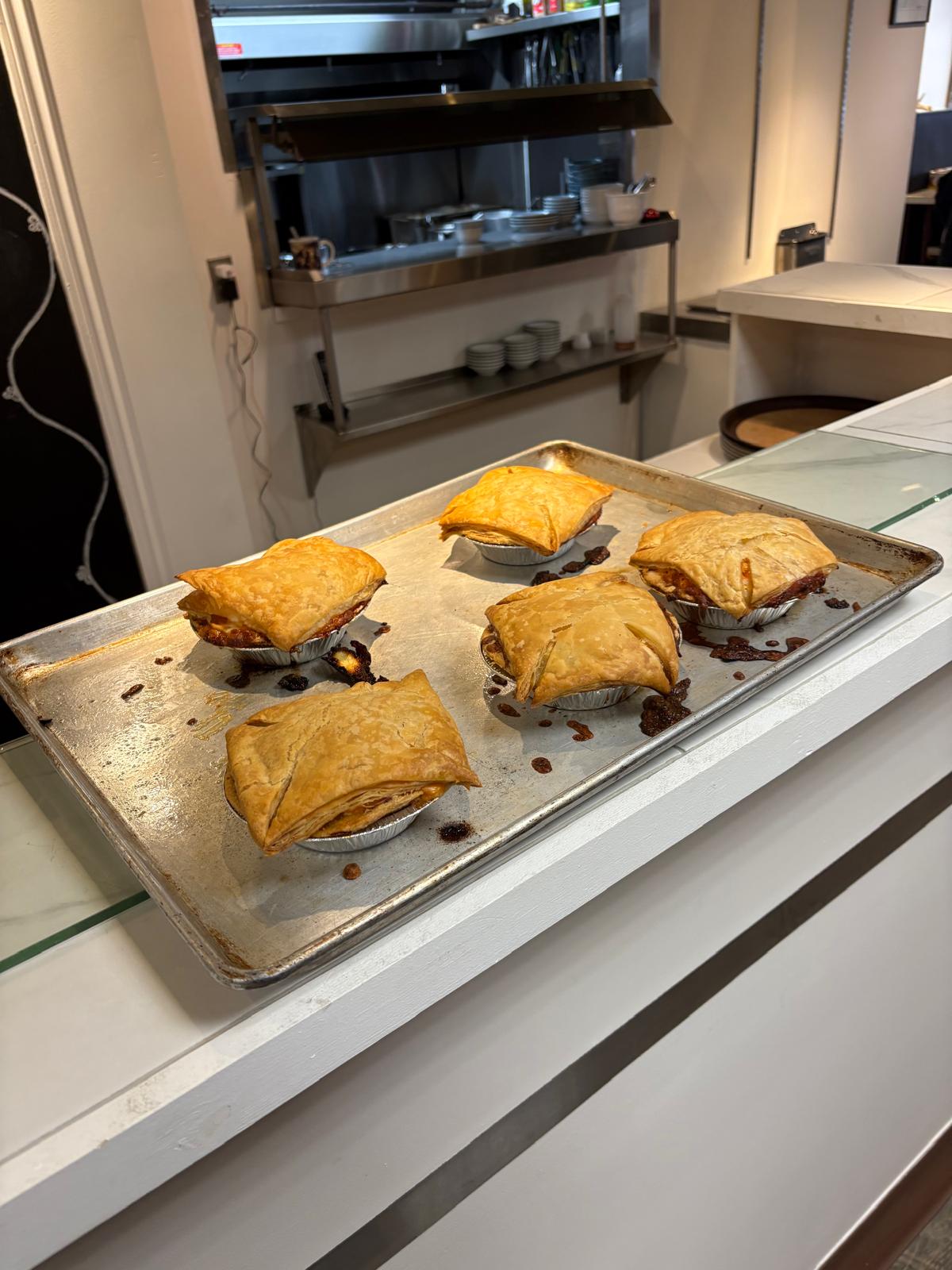
Feeding the Boundary Country — same fire, same heart
Come Eat Where the Miners Ate
Greenwood today has about 700 people. The smelter smokestacks are long gone. The Mother Lode is silent. But the spirit of this place — that stubborn, hard-working, community-first spirit — is alive and well. You can feel it when you sit down at Mama's Grill and order a Gold Miner Omelette. You can taste it in the all-day breakfast, the hand-pressed burgers, and the homemade pie.
The men who pulled copper from these mountains over a hundred years ago would recognize this place. Not the building, maybe — but the feeling. A warm meal. A strong coffee. A place where someone behind the counter knows your name and actually cares whether you liked the food.
Come eat where the miners ate. Come sit in the smallest city in Canada and taste the legacy of copper, gold, and home cooking that made this place what it is. Mama's Grill, 298 South Copper Avenue, Greenwood, BC. The fires are still burning.